
Here's how Amazon could dethrone UPS and FedEx in the US last-mile delivery market (AMZN)

This is a preview of a research report from Business Insider Intelligence, Business Insider's premium research service. To learn more about Business Insider Intelligence,  click here. Current subscribers can read the report here.
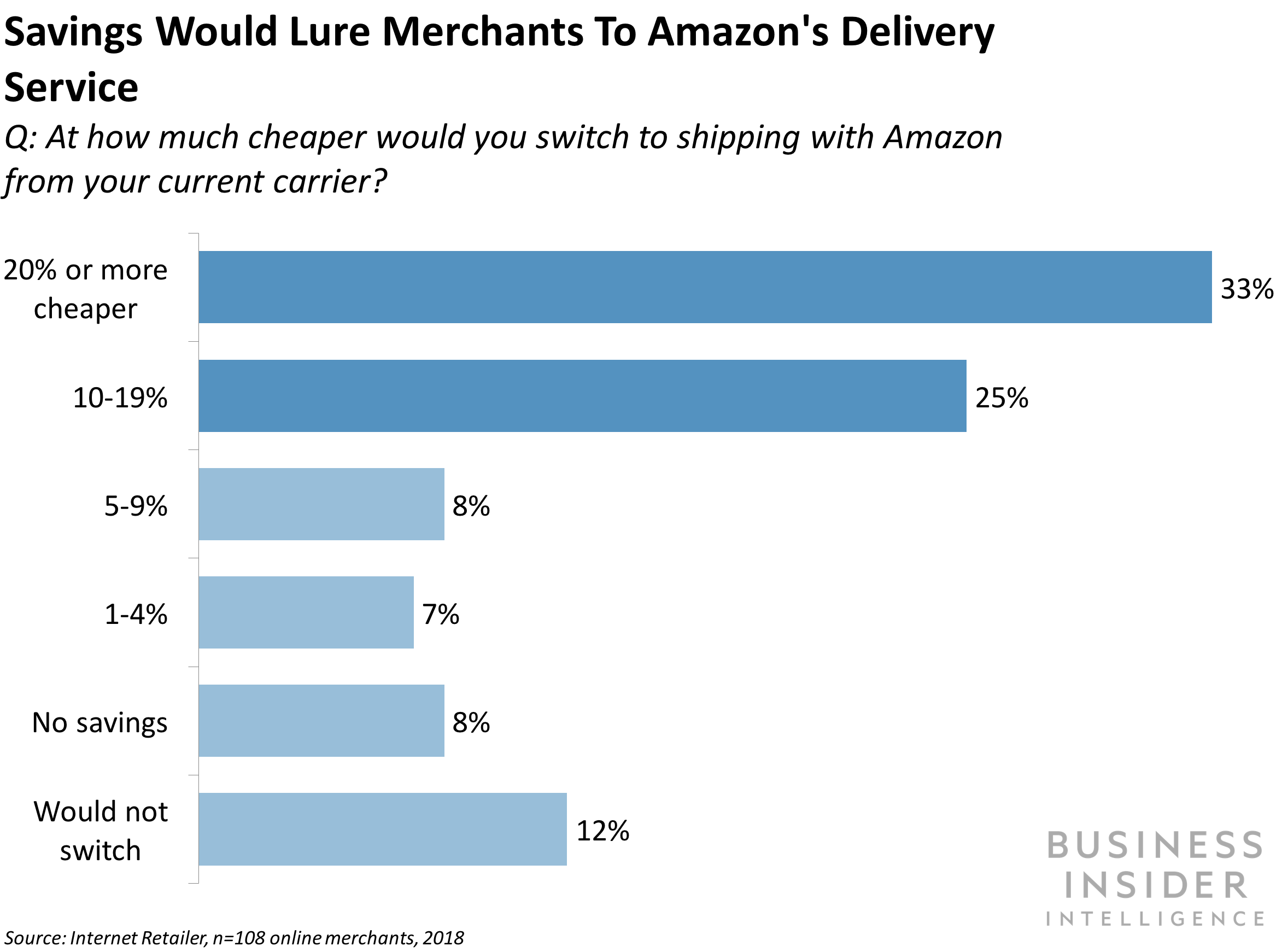
AmazonShipping_CostSavingsBusiness Insider Intelligence

Outside of the US Postal Service (USPS), FedEx and UPS have dominated the domestic logistics industry — and in particular, the last-mile of the delivery — for decades. On a quarterly earnings call in 2016, FedEx estimated that itself, UPS, and USPS executed a whopping 95% of all e-commerce orders.

See the rest of the story at Business Insider

See Also:

SEE ALSO: Amazon and Walmart are building out delivery capabilities

Comments

Popular posts from this blog

Focusing on money above all else was one of my worst mistakes as a CEO

This CEO thought that having a company-wide goal centered on revenue would bring his team together. He was wrong. Driving revenue is an essential part of building a business. And for many entrepreneurs and CEOs, it’s often at the top of the list when it comes to setting goals . But should you make revenue your primary objective? At Thinkific ,  a software that allows entrepreneurs to build their own online courses , we tried this, and it failed. Read Full Story

You’ll never guess Airbnb’s hottest destination for 2020. Really.

Here’s a hint: It’s in the U.S. Planning a trip in the next year? Airbnb has released its hottest destinations for 2020 —a list of cities, countries, and states across the globe that are seeing the largest year-over-year percentage growth in bookings. Of course there are gems you would expect: Hundreds of miles of palm-lined beaches in Kerala, India (which saw a 95% YOY increase), for instance, or the European cultural hot spot Bilbao, Spain (which saw a 402% YOY increase). Read Full Story

Narratives about modernity

If we give an isolated community access to the internet, very quickly, the quality of life will improve. Time will be saved, research into proven solutions will produce value, and people will become connected to a larger population. Those connections will lead to productivity and learning. And, then, soon thereafter, they will become less happy. Not because they’re worse off, but because the dominant media narratives that arrive exist to make them feel insufficient, inadequate or simply jealous at how green the grass is over there. Our narrative defeats our surroundings, every time.